Custom Software
Custom Software vs Off-the-Shelf Software: Which Is Right for Your Business?
Choosing business software is not simply a choice between an expensive custom system and a cheap ready-made tool. The right decision depends on how closely your processes match the market, how quickly you need to launch, what must integrate with your existing tools, and whether software is becoming part of your competitive advantage. This guide compares custom software and off-the-shelf software in practical business terms so you can choose with fewer assumptions.
Section 1
What Custom and Off-the-Shelf Software Actually Mean
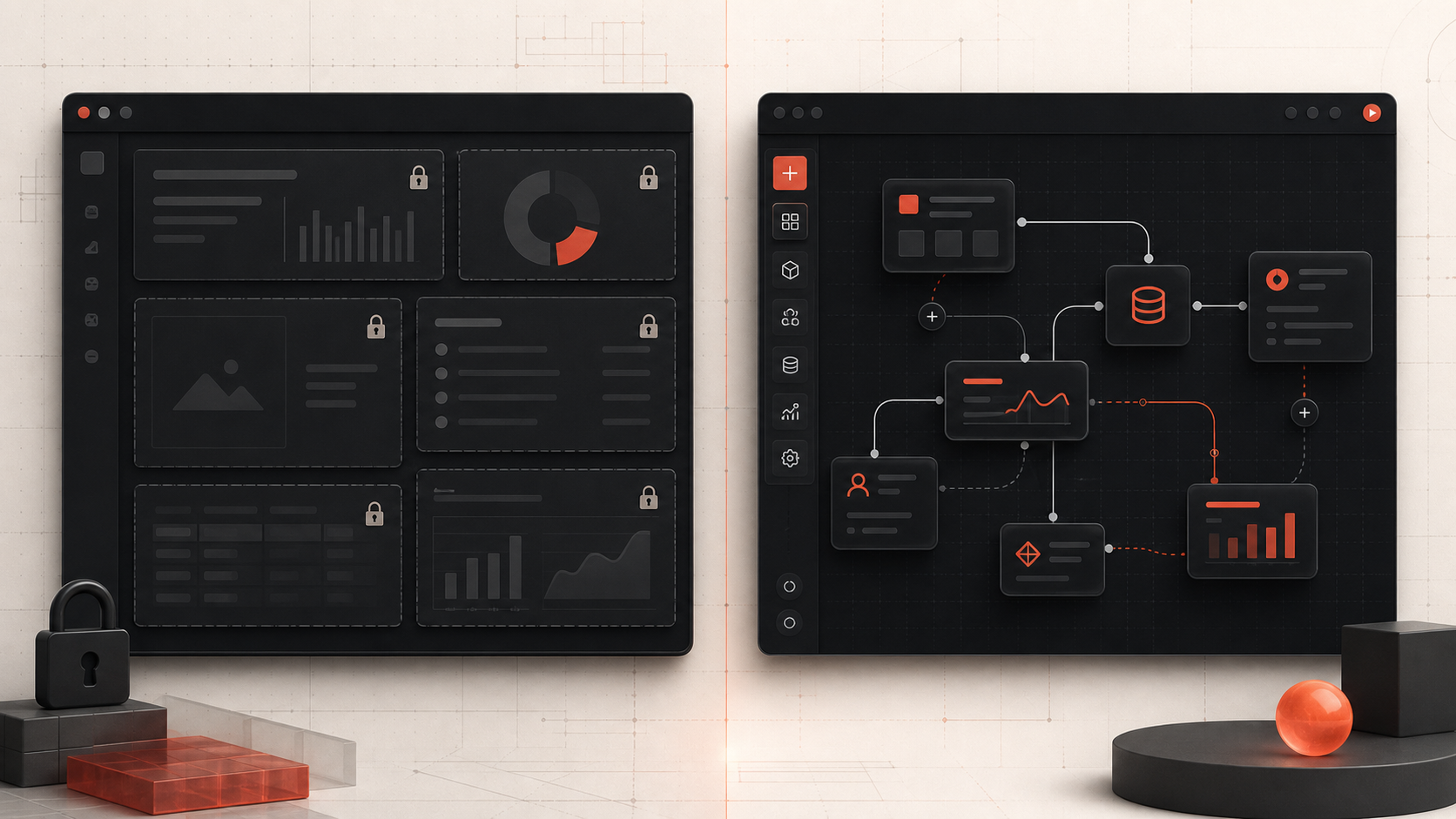
Off-the-shelf software is a product built for a broad market. You subscribe to or license an existing platform, configure the available settings, import your data, and adapt your process to the way the product works. Examples include general CRM platforms, accounting tools, project-management systems, booking software, and industry-specific applications.
Custom software is designed around a specific organisation, workflow, customer journey, or business model. It can be a web application, mobile app, internal dashboard, customer portal, automation system, SaaS platform, or a combination of these. Instead of asking your team to fit a predefined workflow, the software is shaped around the process you want to run.
The distinction is not always absolute. Many businesses use a hybrid approach: a standard accounting system, for example, combined with a custom operations dashboard, CRM integration, customer portal, or automation layer.
Related Service
Not Sure Whether to Buy, Build, or Combine Both?
Criflet can map your workflow, review suitable existing tools, and define a focused custom solution only where it creates clear value. The result is a practical recommendation rather than a push toward unnecessary development.
Discuss Your Software DecisionSection 2
When Off-the-Shelf Software Is Usually the Better Choice
A ready-made platform is often the strongest choice when your requirement is common, your process can follow an established industry pattern, and speed matters more than precise control. A small business that needs basic invoicing, email marketing, payroll, or task management can often start faster with an existing tool than by commissioning a new system.
Off-the-shelf software also reduces initial product risk. You can evaluate demonstrations, reviews, support documentation, integrations, and pricing before committing. Updates, security patches, and infrastructure are normally handled by the vendor. This makes the option attractive when software supports the business but is not central to how the business differentiates itself.
The best candidates for ready-made software are requirements that can be described as standard: store contacts, send invoices, manage simple projects, publish content, schedule appointments, or run basic reports.
- You need to launch quickly.
- Your workflow is common and does not require unusual rules.
- A proven product already covers most of the requirement.
- You prefer predictable subscription pricing.
- You do not need ownership of the underlying product.
Section 3
When Custom Software Becomes the Better Investment
Custom software becomes more valuable when your team is compensating for the limitations of existing tools. Typical warning signs include duplicate data entry, multiple spreadsheets, repeated copying between systems, work being coordinated through personal messages, inconsistent approval steps, and reports that take hours to assemble.
It is also appropriate when the software itself is part of the service you sell. A customer portal, subscription platform, property-management system, field-service application, multi-tenant SaaS product, or proprietary workflow can create an experience competitors cannot reproduce with the same standard tool.
The business case is strongest when custom software removes recurring labour, improves conversion, reduces operational mistakes, gives management better visibility, or enables a new revenue model. The question is not whether custom development costs more at the start. The question is whether it produces more value over the useful life of the system.
- Your process is a source of competitive advantage.
- Existing products require too many workarounds.
- You need specialised integrations or automation.
- Different user types need controlled access and tailored workflows.
- You plan to sell the software as a SaaS product or digital service.
Section 4
Compare Total Cost of Ownership, Not Just the First Invoice
Off-the-shelf software appears cheaper because the entry price is visible: a monthly fee per user, a package tier, or a licence. The less visible costs can include onboarding, data migration, premium integrations, implementation partners, add-ons, higher plans, per-user growth, and staff time spent working around gaps.
Custom software has a larger upfront discovery and development cost, followed by hosting, maintenance, monitoring, updates, and future improvements. However, pricing is usually tied to the product and scope rather than every employee who uses it. For a growing organisation, this can change the long-term comparison.
Calculate three to five years of ownership. Include subscription increases, expected user growth, implementation, integrations, migration, support, manual work that remains, and the cost of switching later. Then compare that with the custom build, maintenance, infrastructure, and measurable savings or revenue opportunities.
Section 5
Flexibility, Integration, Data, and Vendor Dependence
A standard platform gives you configuration within boundaries. You may be able to add fields, build automations, or connect supported applications, but the vendor controls the roadmap, limits, pricing, and feature availability. A future change in your process may require a higher plan or may not be possible at all.
With custom software, the organisation can control the workflow, data model, integrations, reporting logic, interface, and product roadmap. That control is useful, but it also brings responsibility. The system needs secure engineering, documentation, backups, access controls, monitoring, and a sensible maintenance plan.
Data portability deserves special attention. Before choosing either option, confirm how data can be exported, whether APIs are available, who owns custom configurations, what happens when the contract ends, and how easily another system could replace the current one.
Section 6
A Simple Decision Framework for Your Business
Start by listing the outcome, not the features. For example: reduce response time, give customers self-service access, eliminate duplicate entry, assign leads automatically, or create a subscription product. Next, document the current workflow and identify which steps are standard and which are unique.
Evaluate existing products against must-have requirements, not a long wish list. If a platform covers roughly eighty percent of the important process without damaging the customer or staff experience, configuring an existing tool may be sensible. If the missing twenty percent contains the rules that make your operation work, a custom or hybrid system may be justified.
Finally, consider timing, budget, risk, growth, ownership, and internal capability. A small custom MVP can validate the highest-value workflow before you invest in a complete platform. You do not have to replace every tool at once.
- What business result must improve?
- Which requirements are genuinely unique?
- What manual work remains with each option?
- How will costs change as users and transactions grow?
- What data and integrations must remain under your control?
- Could a hybrid solution deliver value sooner?
Section 7
Common Mistakes to Avoid
Do not build custom software merely because existing tools feel imperfect. Every custom feature creates design, testing, security, maintenance, and support obligations. Equally, do not choose a popular platform only because it is easy to buy. A tool that forces the wrong workflow can create a permanent operational tax.
Another mistake is comparing a complete enterprise product with the first version of a custom system. Compare the exact workflow you need today and the growth path you expect. A focused system that performs a critical job well can be more valuable than a large platform filled with unused modules.
Next Step
Turn the Decision Into a Clear Software Plan
Share your current tools, workflow, and business goals with Criflet. We will help you identify what should stay standard, what should be integrated, and what may be worth building.
Contact CrifletFrequently Asked Questions
Common questions about this topic.
It normally requires a higher initial investment, but the long-term cost depends on user growth, subscription fees, integrations, manual work, maintenance, and the value created by a better workflow.
Most products allow configuration, extensions, or integrations, but customisation remains limited by the vendor’s architecture, pricing plans, APIs, and roadmap.
A hybrid approach keeps standard tools for common functions and builds a custom application, portal, integration, or automation layer for business-specific requirements.
Document the steps, rules, user roles, exceptions, and data movement. If the parts that existing tools cannot support are central to efficiency, service quality, or competitive advantage, custom development may be justified.